

British Columbia building code for glass railings mandates a minimum guard height of 42 inches for decks. Canada Railing Solutions Ltd. supplies tempered and laminated safety glass systems engineered to meet these provincial standards. The code governs panel thickness, load resistance, and climbability requirements for residential and commercial properties.
What does the BC Building Code require for glass railings?
The British Columbia Building Code (BCBC) governs every glass railing installation across the province. The BCBC dictates guardrail design, material specifications, and installation methods for decks, balconies, stairways, and pool surrounds. Non-compliance triggers costly remediation: failed inspections force contractors to dismantle finished work, and property owners face liability exposure for unsafe guardrails. The BCBC provides explicit glass panel and railing height specifications that eliminate guesswork for builders and architects.
What are the deck railing height requirements in BC?
Height mandates vary by application. The BCBC sets minimum guardrail heights based on the elevation of the walking surface above the adjacent ground or floor level. Residential decks and balconies typically require a guardrail when the surface exceeds 600 mm above grade, though specific height measurements depend on the building classification and occupancy type. Stair guardrails follow a separate measurement standard, and pool enclosures carry additional restrictions. Builders who misjudge these thresholds risk inspection rejection and project delays.
How do tempered glass guardrails meet BC safety standards?
Tempered glass guardrails satisfy BCBC requirements through engineered strength and predictable failure behavior. The code mandates safety glazing that fractures into small, granular pieces rather than dangerous shards upon impact. Glass panel thickness, lamination, and edge treatment all factor into compliance. Canada Railing Solutions Ltd. engineers its glass railing systems to align with National Building Code (NBC) requirements, which inform the BCBC standards. The company’s tempered and laminated safety glass assemblies withstand structural loads while preserving unobstructed sightlines, a critical consideration for British Columbia properties with mountain and waterfront views.
Who enforces GLASS RAILING BUILDING CODES IN BC?
Local building officials enforce the BCBC through plan reviews and field inspections. An agency within the provincial government periodically reviews and updates the code to reflect evolving safety research and construction practices. Contractors who install glass railings without confirming municipal interpretations of the BC building code glass railing provisions risk non-compliance even when using code-compliant products. Canada Railing Solutions Ltd. supports builders and developers by supplying systems engineered to meet current code requirements, reducing friction during the approval process.
What are the deck railing height requirements in BC?
Deck railing height requirements in British Columbia are set by the BC building code glass railing provisions within the British Columbia Building Code (BCBC). These specifications mandate minimum guardrail heights to prevent falls from decks, balconies, and stairways. Getting the measurements wrong triggers expensive rework. Contractors and homeowners alike prioritize height compliance because failed inspections mean tearing out finished installations and starting over.
The BCBC establishes different height thresholds based on the walking surface elevation above the adjacent ground or floor below. For residential decks and balconies where the walking surface sits more than 600 mm (24 inches) above the adjacent surface, guardrails must reach a minimum height of 1,070 mm (42 inches). Commercial and multi-family applications often require greater heights based on occupancy classification. Stair guardrails follow a separate measurement standard.
Why do deck railing heights vary between residential and commercial projects?
Occupancy type drives the height difference. Residential decks serve fewer people under predictable conditions. Commercial and multi-family buildings experience higher traffic volumes and greater liability exposure. The BCBC responds with stricter guardrail dimensions for these settings.
What happens when deck railing heights fail inspection?
Non-compliant railings must be removed and rebuilt to code. This process doubles material costs and delays project completion. Inspectors measure from the deck surface to the top of the guardrail, checking every linear section. Any shortfall constitutes a violation.
Deck railing height requirements extend beyond the vertical measurement. The BCBC also governs opening limitations between balusters or glass panels. Spaces cannot permit a sphere of the code-specified diameter to pass through. Load resistance standards require guardrails to withstand a specified horizontal force applied at the top rail. These combined rules ensure the entire assembly protects occupants from falls.
Canada Railing Solutions Ltd. supplies code-compliant systems engineered for BC conditions. The company’s aluminum picket railings use high-strength 6063-T5 aluminum, a material that delivers structural rigidity without rust or corrosion. These tempered glass guardrails and picket assemblies meet BCBC height, spacing, and load specifications for balconies and perimeter fencing. Builders and developers gain a pre-engineered path to inspection approval without custom fabrication delays.
Why are tempered glass guardrails required for safety?
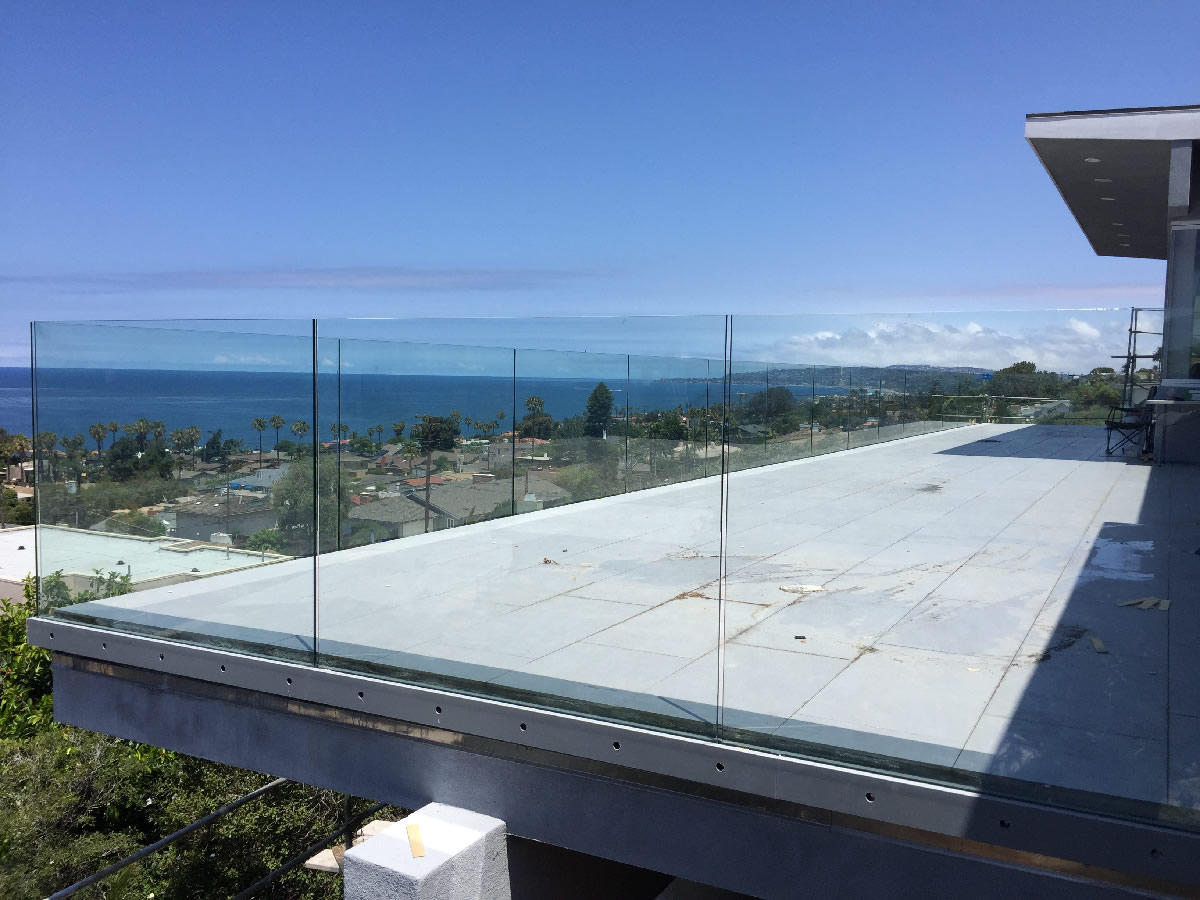
Tempered glass guardrails deliver impact resistance that ordinary annealed glass cannot match. The BC building code glass railing standards mandate this material because it fractures into small, blunt fragments rather than dangerous shards when broken. Canada Railing Solutions Ltd. engineers its multi-family railing systems with tempered safety glass and durable aluminum framing to ensure lasting stability, safety, and wind-load performance in premium condo developments across British Columbia.
The safety case extends beyond impact behavior. Tempered glass guardrails provide structural integrity under continuous wind exposure on high-rise balconies and rooftop terraces. Glass deck railings using this material offer a lifespan of 25+ years, according to the Glass Deck Railings guide from Kelowna and the Okanagan. That durability matters for view properties where railing replacement means scaffolding, disruption, and significant cost.
What makes tempered glass safer than standard glass?
Tempered glass undergoes controlled thermal treatment that creates surface compression. This process increases strength by roughly four to five times compared to untreated glass. When failure occurs, the pane disintegrates into small granular pieces instead of sharp-edged shards. For deck railing height requirements compliance, this fracture pattern reduces laceration risk on elevated platforms where falls already pose serious hazards.
How do BC weather conditions influence glass railing safety?
British Columbia’s climate demands materials that perform under heavy snow loads and strong coastal winds. Canada Railing Solutions Ltd. uses tempered and laminated safety glass in its canopy systems specifically to withstand these conditions. The same engineering principle applies to glass railing building codes in BC for balcony guards and perimeter railings. Laminated interlayers hold fractured glass in place, preventing panel blowout during extreme weather events.
Contractors and developers evaluating glass railing systems for multi-family projects should verify that every panel carries a tempered glass certification mark. Non-compliant glass creates liability exposure that no project budget absorbs easily.
How do wind loads and climate affect glass railing code compliance?
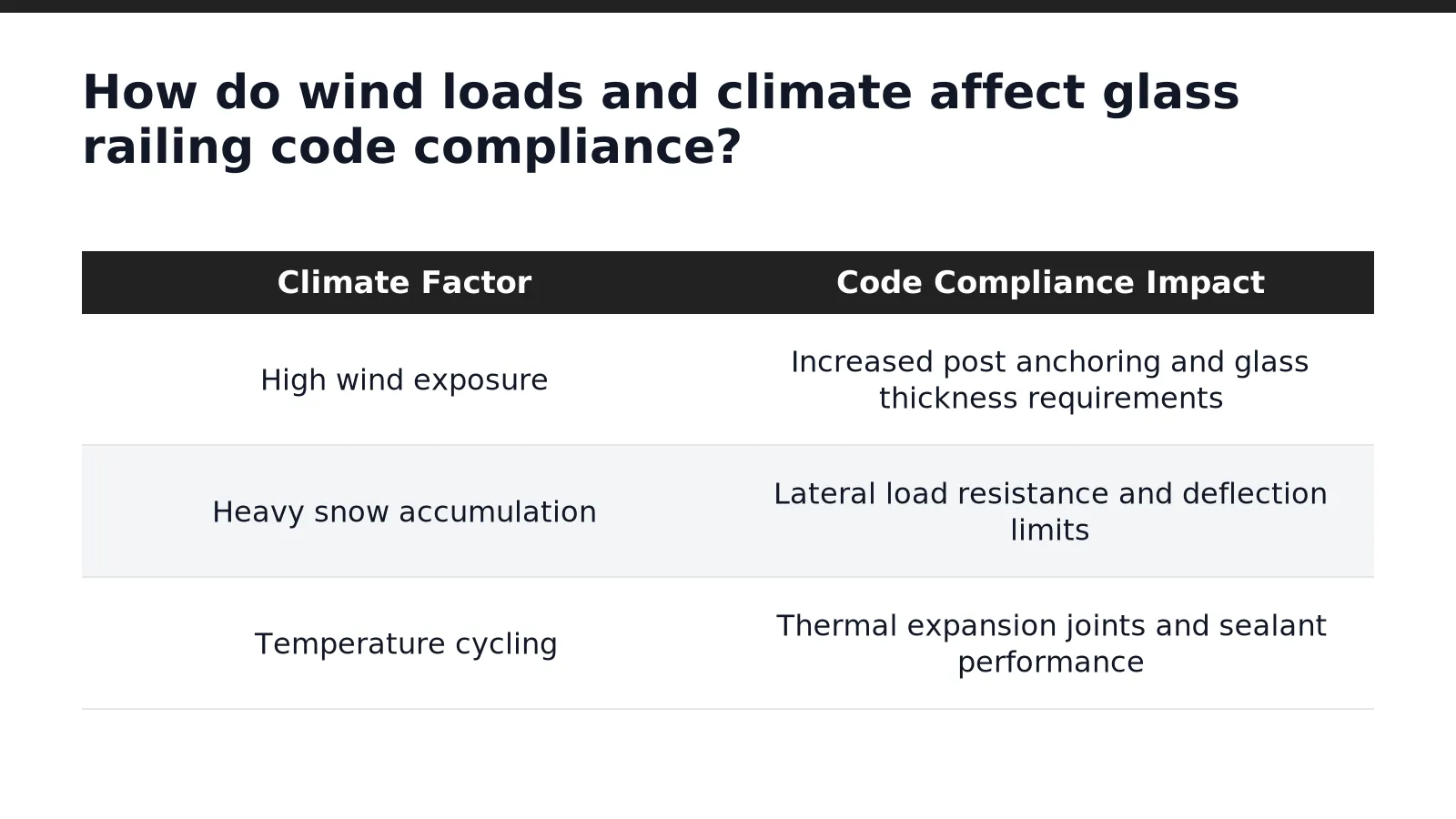
Wind loads and climate directly determine glass railing design requirements in British Columbia. The BC building code glass railing provisions mandate structural calculations that account for regional wind pressures, snow accumulation, and temperature cycling. Failure to address these forces leads to panel fracture, post fatigue, and guardrail failure under service conditions.
The British Columbia Building Code undergoes periodic review by a government agency to safeguard lives and properties. The Glass Railing Store notes that these updates address evolving climate-related load requirements across the province. Coastal regions face higher wind exposure than interior valleys. Mountain communities contend with heavy snow and ice accumulation. Each condition changes the engineering parameters for guardrail systems.
Canada Railing Solutions Ltd. engineers railing systems to withstand Canada’s harshest weather, including heavy snow and strong winds. The company’s tempered glass guardrails and structural components are designed for both residential and commercial properties. This dual-market engineering ensures code compliance across varied climatic zones in British Columbia.
What wind load standards apply to glass railings in BC?
The BCBC references National Building Code provisions for wind load calculations. Designers must verify glass panel thickness, post spacing, and base shoe anchoring against site-specific wind pressures. Coastal installations on Vancouver Island and the Lower Mainland require higher load ratings than sheltered interior locations.
How does snow load affect glass railing design?
Snow accumulation against glass panels creates lateral pressure that exceeds standard occupancy loads. Railing systems must resist this sustained force without deflection beyond code limits. Canada Railing Solutions Ltd. addresses these conditions through engineered systems suited to heavy snow regions.
Selecting the best railing systems for British Columbia conditions requires evaluating material performance against regional climate data. Contractors and developers who ignore wind and snow parameters risk inspection failures and costly remediation.
What should you check before installing glass deck railings?
A pre-installation checklist for glass deck railings in British Columbia centers on three non-negotiable items: code compliance, site conditions, and material specifications. Missing any one of these checks triggers costly rework, failed inspections, or safety hazards that compromise the entire deck project.
Glass railing building codes in BC demand strict adherence to height, load, and glass type requirements. The British Columbia Building Code specifies guardrail heights based on deck elevation above grade, and inspectors verify these measurements before signing off. Tempered glass guardrails must use safety-rated panels that meet impact and breakage standards, a requirement that eliminates ordinary annealed glass from consideration entirely.
BC building code glass railing provisions also govern post spacing, panel thickness, and handrail integration. Contractors who skip the pre-check phase often discover that off-the-shelf systems fail to satisfy local amendments adopted by individual municipalities across the province.
What are the deck railing height requirements in British Columbia?
Deck railing height requirements in BC mandate a minimum guardrail height of 42 inches for decks elevated more than 24 inches above adjacent ground. Lower decks may qualify for reduced heights, but the 42-inch standard applies to most residential installations. Builders must confirm the exact measurement with their local authority, as some jurisdictions enforce stricter thresholds.
Why do Okanagan homeowners prefer glass deck railings?
Glass deck railings provide unobstructed views, making them ideal for Okanagan properties with lake or mountain vistas. Homeowners with waterfront or hillside lots gain a premium deck experience that wood or metal pickets cannot deliver. The transparent barrier preserves sightlines to the landscape while meeting all structural safety obligations.
Canada Railing Solutions Ltd. supplies a comprehensive range of glass, aluminum, and steel railing systems for multi-family, residential, and commercial developments. The company operates local branch brands, including Kelowna Railing Solutions and Vancouver Glass Railing Solutions, to serve specific markets with regionally appropriate products. For property owners in the Okanagan, Kelowna deck railing options span aluminum pickets, glass systems, and stainless steel cable assemblies, all engineered to satisfy National Building Code standards.
Conclusion
Deck safety in British Columbia rests on verified compliance with the BCBC’s height, load, and glass-type provisions, and every contractor or homeowner who confirms those requirements before installation avoids the liability and rework that follow failed inspections. The decision to install glass railings therefore begins with a straightforward step: check the local authority’s exact standards, confirm the engineered system matches site-specific wind and snow loads, and proceed with confidence that the guardrail meets provincial code.